 Readerfold
Where does attraction become trust?
Free tool · No signup or manuscript upload
Build a questionnaire for your draft.
Choose your genre and draft stage. Edit the questions, remove any you don’t need, and download a reading brief you can send to people.
Updating the options replaces edits below. Series-ending and full-reveal questions are omitted for excerpts.
Enable JavaScript to customize. These starter questions are readable and printable without it.
Where did you first want to keep reading? Which detail created that interest?
Locates the moment the story earns attention.Where did you skim or lose the thread? Name the passage and what you were waiting to learn.
Separates a loss of interest from missing context.Which detail would you most want preserved in a revision, and what would be lost without it?
Identifies strengths a revision might accidentally remove.When did attraction begin to feel like trust? What did one character actually do to earn that change?
Distinguishes an asserted bond from one built through actions.What seemed to keep the couple apart, and when did that obstacle become convincing or stop convincing you?
Checks whether the relationship conflict holds beyond a convenient misunderstanding.Where did each person make a meaningful choice about the relationship? Where did one person's wishes become unclear?
Examines agency and boundaries from the reader's perspective.At the end of this excerpt, what did you expect to happen next, and why?
Tests the promise of the excerpt without asking for a whole-book judgment.
How to use the romance questions
A declaration can name a feeling without making the reader believe it. Use these questions to find the actions, choices, and boundaries that make a relationship change on the page.
Ask when the bond changes
'Did they have chemistry?' invites a broad verdict. Ask which moment made the reader want the couple to get closer, and which action changed their trust. The location helps you distinguish attractive dialogue from a relationship that actually develops.
Make room for each person's choice
Ask readers what each person wants from the relationship and where that becomes clear. If a gesture feels romantic to one reader but intrusive to another, return to how the receiving character responds. Their agency is part of the scene, not a detail to supply after the fact.
Check the obstacle at the moment it matters
Imagine a character refuses a second date to protect a family secret. Ask what the reader believed would happen if the date went ahead. 'I thought she was simply uninterested' suggests a different revision from 'I understood the risk, but did not believe she cared about it.'
Choose relationship-focused AI feedback
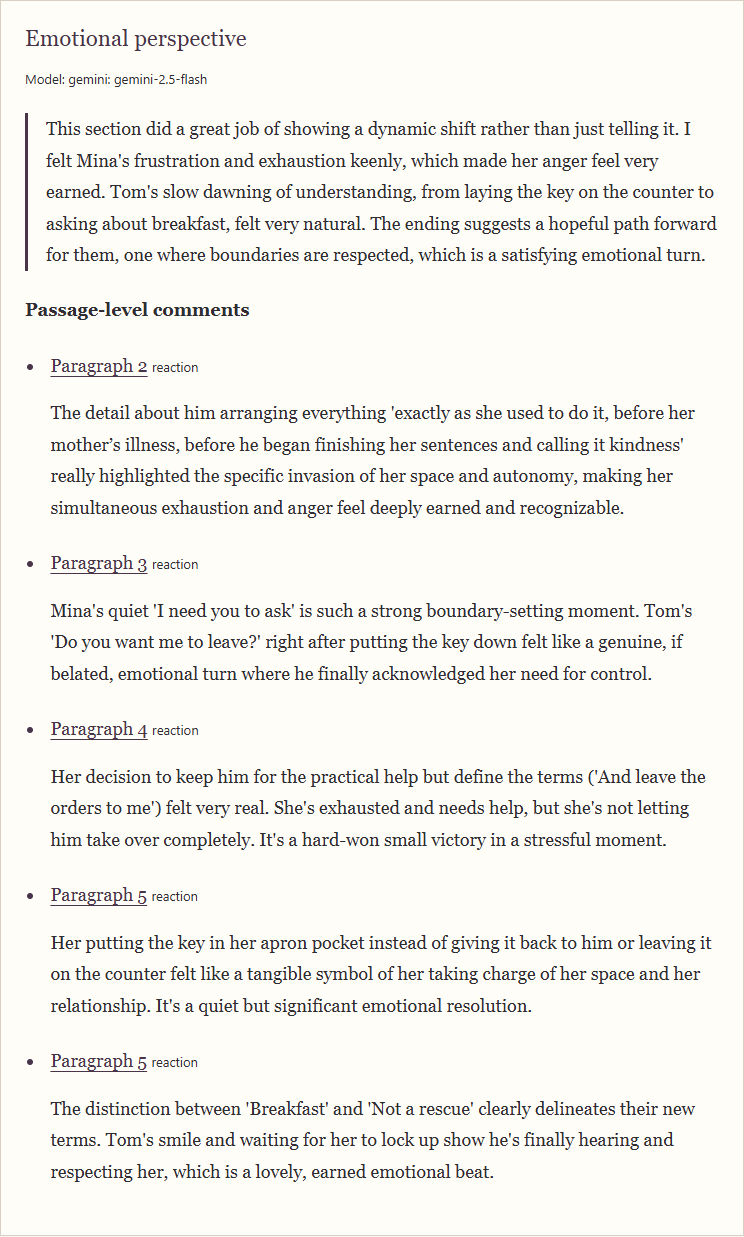
In Readerfold, pair Relationship chemistry with Emotional authenticity or Character motivation. Include the buildup to the romantic turning point. Ask for reactions to the choices, then compare those reactions before deciding whether to add explanation.
Follow the question into a reading.
For the general reading brief and twelve reference questions, return to the main beta reader questionnaire.
These are original editorial questions and illustrative examples, not a survey or a promise of audience response.